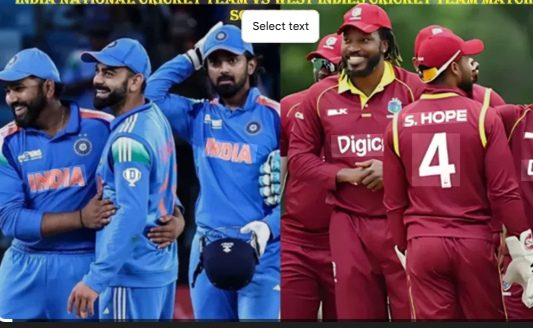
The rivalry between the India National Cricket Team and the West Indies Cricket Team is one of cricket’s most fascinating journeys, filled with changing power dynamics, iconic performances, and unforgettable match scorecards. From the early days of Caribbean dominance to India’s steady rise as a global powerhouse, every encounter has added a new chapter to this evolving story. This rivalry is not just about statistics but about resilience, flair, and the spirit of competition. Across formats and generations, it has produced moments that continue to shape cricket history and captivate fans around the world.
Latest Matches
Tournament
Venue
Date
Toss
India Score
West Indies Score
Result
Series
Player of the Match
T20 World Cup
Eden Gardens, Kolkata
Mar 1, 2026
India (field)
199/5 (19.2 ov)
195/4 (20 ov)
India won by 5 wkts
T20 World Cup 2026
Sanju Samson
Test
Arun Jaitley Stadium, Delhi
Oct 10-14, 2025
India (field)
518/5d & 124/3
248 & 390
India won by 7 wkts
West Indies tour of India 2025/26
Kuldeep Yadav
Test
Narendra Modi Stadium, Ahmedabad
Oct 2-4, 2025
West Indies (bat)
448/5d
162 & 146
India won by an innings & 140 runs
West Indies tour of India 2025/26
Ravindra Jadeja
Bilateral T20I
Providence Stadium, Guyana
Aug 13, 2023
India (field)
165/9 (20 ov)
171/2 (18 ov)
West Indies won by 8 wkts
India tour of West Indies 2023
Nicholas Pooran
Bilateral T20I
Providence Stadium, Guyana
Aug 12, 2023
West Indies (bat)
179/1 (17 ov)
178/8 (20 ov)
India won by 9 wkts
India tour of West Indies 2023
Suryakumar Yadav
Bilateral T20I
Providence Stadium, Guyana
Aug 8, 2023
India (field)
164/3 (17.5 ov)
159/5 (20 ov)
India won by 7 wkts
India tour of West Indies 2023
Yashasvi Jaiswal
Bilateral T20I
Providence Stadium, Guyana
Aug 6, 2023
West Indies (bat)
152/7 (20 ov)
155/8 (18.5 ov)
West Indies won by 2 wkts
India tour of West Indies 2023
Akeal Hosein
All-Time Head-to-Head Record
Format
Matches Played
India Won
West Indies Won
Drawn / Tied / NR
India Win %
Test
102
25
30
47
24.5%
ODI
142
72
64
6
50.7%
T20I
31
20
10
1
64.5%
Overall
275
117
104
54
42.5%
All-Time Batting Leaders
Rank
Player
Team
Matches
Wickets
Bowling Average
Best Bowling Figures
5-Wicket Hauls
1
Malcolm Marshall
WI
28
76
20.94
7/77
6
2
Kapil Dev
IND
25
89
24.89
9/83
7
3
Andy Roberts
WI
14
67
~22.5
12/121
5
4
Courtney Walsh
WI
15
52
~25.1
7/37
3
5
Ravichandran Ashwin
IND
12
47+
22.80
12/131
6
6
Anil Kumble
IND
18
45
~28.5
10/74
4
7
Ravindra Jadeja
IND
15
38
24.10
7/42
3
All-Time Bowling Leaders
Rank
Player
Team
Matches
Wickets
Bowling Average
Best Bowling Figures
5-Wicket Hauls
1
Kapil Dev
India
25+
89+
24.89
9/83
7+
2
Malcolm Marshall
West Indies
17-28
76
20.94-21.98
7/77 / 11/89
6
3
Ravichandran Ashwin
India
12-13
75+
20.48-22.80
12/131
6
4
Anil Kumble
India
17-18
74+
28.5-29.78
10/74 / 8/196
4+
5
Andy Roberts
West Indies
14
67
~22.5
12/121
5
6
Ravindra Jadeja
India
15+
53+
24.10
7/42
3+
7
Courtney Walsh
West Indies
15
52+
~25.1
7/37
3
When Caribbean Fire Met Indian Resilience
When the India National Cricket Team first crossed paths with the West Indies Cricket Team, it was more than just a contest of bat and ball. It was a clash of rhythm and resolve. The Caribbean side brought raw pace, swagger, and an intimidating aura built on fearsome fast bowlers and explosive batting. India, on the other hand, relied on patience, technique, and an unbreakable spirit that refused to bend under pressure. Early scorecards often told a story of West Indies dominance, with towering totals and devastating spells. Yet beneath those numbers was a growing resilience in the Indian lineup. Each defeat became a lesson, each match a step toward belief. Over time, Indian batters began to adapt, learning to face pace with courage and precision. Bowlers found ways to counter Caribbean aggression with spin and strategy. This rivalry slowly transformed into a battle of equals, where flair met discipline and aggression met determination, creating some of cricket’s most memorable encounters.
Aspect
India Approach
West Indies Approach
Impact on Matches
Batting Style
Technical and patient
Aggressive and attacking
Balanced scoring battles
Bowling Strength
Spin-focused strategy
Fast bowling dominance
Varied pitch outcomes
Team Mindset
Resilient and composed
Confident and fearless
Intense on-field contests
Early Scorecards
Learning phase
Dominant performances
One-sided initial results
Evolution Over Time
Improved adaptability
Slight decline in dominance
More competitive encounters
The First Encounters That Sparked Curiosity
The early meetings between the India National Cricket Team and the West Indies Cricket Team carried a sense of curiosity rather than rivalry. When the two sides first faced each other in the 1950s, cricket was still evolving in India, while the West Indies had already begun showcasing their natural flair and attacking intent. The initial match scorecards reflected a clear gap in experience and execution, with the Caribbean side often dominating through powerful batting and disciplined bowling. Yet, these encounters were far from predictable. Indian players showed glimpses of resistance, crafting patient innings and testing the opposition with spin. Each match added a new layer to the growing narrative, as fans from both regions became increasingly invested. These games were not just about results but about understanding strengths, weaknesses, and styles. Over time, curiosity turned into respect, as India began to learn from these challenging contests, setting the stage for a rivalry that would grow deeper and more competitive with every passing series.
Aspect
India in Early Matches
West Indies in Early Matches
Match Impact
Experience Level
Developing cricket side
More established team
West Indies had advantage
Batting Approach
Defensive and patient
Free-flowing and aggressive
Higher WI totals
Bowling Strategy
Spin-oriented
Balanced with pace
WI controlled key moments
Match Scorecards
Lower totals
Dominant performances
One-sided outcomes
Fan Interest
Growing curiosity
Rising confidence
Foundation of rivalry
Era of West Indies Dominance and Fear Factor
The period from the 1970s to the early 1990s marked an era where the West Indies Cricket Team stood as an unstoppable force, and their encounters with the India National Cricket Team often carried a sense of fear and anticipation. West Indies built a legacy around their fearsome pace attack, with bowlers delivering relentless speed and bounce that troubled even the most skilled Indian batters. Match scorecards from this era frequently reflected their dominance, with quick wickets and commanding totals putting India on the back foot. For Indian players, facing such intensity was a test of courage and technique. Yet, these challenges also sparked growth. Some Indian batters began showing resilience, standing firm against the storm and slowly earning respect. Despite the one-sided nature of many results, the contests were never short of drama. This phase defined the psychological edge West Indies held, but it also planted the seeds of determination within India, shaping a future where they would rise stronger and more competitive.
Aspect
West Indies Strength
India’s Response
Impact on Matches
Bowling Attack
Fast and aggressive
Struggled against pace
Early WI dominance
Batting Power
Explosive and confident
Defensive approach
High WI scores
Match Scorecards
Frequent wins
Limited success
One-sided contests
Player Confidence
Dominant mindset
Learning under pressure
Psychological edge WI
Long-term Effect
Established supremacy
Built resilience
Future rivalry shift
India’s Fightback Begins on Home Soil
The turning point in the rivalry between the India National Cricket Team and the West Indies Cricket Team began on Indian soil, where conditions started to favor the home side. Slow pitches, turning tracks, and passionate crowds created an environment where India could finally challenge Caribbean dominance. Match scorecards from this phase began to look different, with Indian bowlers, especially spinners, taking control and restricting the powerful West Indies batting lineup. Batters adapted as well, showing patience and building innings that could withstand pressure. Victories at home were not just wins but statements of growth and belief. These matches shifted the psychological balance, as West Indies were no longer invincible. Indian players displayed confidence, tactical awareness, and a deeper understanding of their strengths. This phase marked the beginning of a more competitive rivalry, where India proved that with the right conditions and mindset, they could stand toe to toe with one of cricket’s most dominant teams.
Aspect
India’s Strength at Home
West Indies Challenge
Match Impact
Pitch Conditions
Spin-friendly surfaces
Less effective pace attack
Balanced contests
Bowling Strategy
Strong spin attack
Adjusting to conditions
WI batting tested
Batting Approach
Patient and controlled
Aggressive but challenged
Lower WI dominance
Match Scorecards
Improved Indian results
Reduced winning margin
Competitive outcomes
Crowd Influence
High energy support
Pressure on visitors
Boost for India
The Rise of Indian Legends Against Caribbean Greats
As the rivalry deepened, it became a stage where legends were forged and reputations tested. The India National Cricket Team began producing icons who could stand tall against the mighty West Indies Cricket Team. Players like Sunil Gavaskar showcased unmatched technique against fearsome pace, while Kapil Dev brought all-round brilliance that inspired belief. On the other side, Caribbean greats like Viv Richards dominated with fearless batting, and bowlers such as Malcolm Marshall delivered spells that defined the era. Match scorecards from this period were no longer one-sided; they reflected intense individual battles that often decided the outcome. A century from Gavaskar or a fiery spell from Kapil could change the course of a match, just as a blistering knock from Richards could tilt momentum instantly. These contests were rich in quality and drama, as players pushed their limits against world-class opposition. This era transformed the rivalry into a true contest of greatness, where individual brilliance and team effort combined to create unforgettable cricketing moments.
Aspect
Indian Legends Contribution
Caribbean Greats Impact
Match Influence
Batting Excellence
Gavaskar’s consistency
Richards’ aggressive style
High-quality contests
All-round Performance
Kapil Dev’s versatility
Balanced team strength
Game-changing moments
Bowling Strength
Emerging pace and spin mix
Dominant fast bowlers
Competitive balance
Match Scorecards
Improved Indian totals
Strong WI responses
Close finishes
Rivalry Impact
Growing confidence
Maintained intensity
Legendary encounters
World Cup Clashes That Changed Perceptions
The rivalry between the India National Cricket Team and the West Indies Cricket Team reached a defining moment during global tournaments, especially the Cricket World Cup. The most iconic shift came in 1983, when India stunned the mighty West Indies in the final, rewriting cricket history. Until then, West Indies were seen as unbeatable world champions, dominating previous editions with ease. Match scorecards from that final told a dramatic story, with India defending a modest total through disciplined bowling and fearless fielding. Players like Kapil Dev led with belief, while the Caribbean lineup, filled with stars, struggled under pressure. That victory changed perceptions overnight. India was no longer just a competing team but a champion capable of defeating the best. Subsequent World Cup encounters carried more intensity, as both sides entered the field with equal confidence. These clashes were no longer predictable, and every match became a battle of nerves, strategy, and execution, leaving a lasting impact on the legacy of this historic rivalry.
Aspect
India in World Cups
West Indies in World Cups
Match Impact
Pre-1983 Status
Underdogs
Dominant champions
WI strong advantage
1983 Final
Historic victory
Unexpected defeat
Shift in global perception
Key Player Impact
Kapil Dev leadership
Star-studded lineup
Pressure moments decisive
Match Scorecards
Low but defended totals
Struggled under pressure
Dramatic outcomes
Rivalry Outcome
Rising confidence
Reduced dominance
Balanced competition
The Transition Era and Changing Power Balance
As the golden era of the West Indies Cricket Team began to fade, the rivalry with the India National Cricket Team entered a phase of transformation. The late 1990s and early 2000s saw a gradual shift in power, reflected clearly in match scorecards that were no longer dominated by one side. West Indies, once feared for their relentless pace attack, struggled to maintain consistency as legendary players retired. Meanwhile, India emerged stronger, backed by a new generation of confident and technically sound cricketers. Batters started posting bigger totals, while bowlers adapted to different conditions with greater discipline. Matches became unpredictable, often going down to crucial sessions or final overs. The balance of power was no longer tilted heavily toward the Caribbean side. Instead, it evolved into a contest where strategy, form, and execution determined the outcome. This transition era reshaped the rivalry, turning it into a more competitive and evenly matched battle that kept fans engaged and invested across formats.
Aspect
India’s Growth
West Indies Changes
Match Impact
Team Strength
Rising talent pool
Decline after legends era
Balanced contests
Batting Performance
Consistent higher totals
Inconsistent scoring
Competitive scorecards
Bowling Strategy
Improved pace and spin mix
Less dominant pace attack
Evenly matched games
Match Results
Increased Indian wins
Fewer dominant victories
Shift in power balance
Rivalry Nature
Confident approach
Rebuilding phase
Unpredictable outcomes
T20 Cricket and a New Age Rivalry
The arrival of T20 cricket brought a fresh and electrifying dimension to the rivalry between the India National Cricket Team and the West Indies Cricket Team. This format suited the natural flair of West Indies, known for their explosive hitters, while India adapted quickly with a blend of technique and innovation. Match scorecards in T20 encounters began reflecting high-scoring thrillers, quick turnarounds, and unpredictable finishes. Players like Chris Gayle showcased brute power, turning games single-handedly, while Indian stars brought consistency and calculated aggression to the crease. The influence of franchise leagues added familiarity among players, intensifying competition on the international stage. Matches became faster, louder, and more dramatic, with every over carrying momentum shifts. Fielding standards improved, strategies evolved, and captains had to think on their feet. This new age rivalry was no longer about patience but about seizing moments. It redefined how both teams approached the game, making every clash an entertaining spectacle filled with energy, pressure, and unforgettable highlights.
Aspect
India in T20 Era
West Indies in T20 Era
Match Impact
Batting Style
Balanced aggression
Power-hitting dominance
High-scoring games
Key Players
Consistent performers
Explosive match-winners
Individual brilliance
Match Scorecards
Structured innings
Rapid scoring bursts
Unpredictable outcomes
Game Strategy
Tactical planning
Natural attacking approach
Fast momentum shifts
Rivalry Nature
Competitive and adaptive
Entertaining and fearless
Modern cricket excitement
Conclusion
As the India National Cricket Team and the West Indies Cricket Team continue to face each other, the rivalry stands as a testament to cricket’s ever-changing nature. What began as a one-sided contest has transformed into a competitive and dynamic battle filled with skill, strategy, and emotion. Match scorecards now reflect not just results but stories of growth, adaptation, and determination. With new players emerging and formats evolving, the future promises even more thrilling encounters, ensuring that this historic rivalry remains alive, relevant, and deeply cherished by cricket fans worldwide.


Leave a Reply